Oaxaca pulled me in the first time I visited and I kept going back. Not because it is “charming” in the way that travel brochures describe places — it is actually kind of messy, loud, and the streets smell like smoke and roasting chiles at the same time. But the food is the best in Mexico, the markets are the best in Mexico, and the combination of Zapotec heritage, colonial architecture and DIY mezcal culture creates something you don’t find anywhere else in the country.
In This Article
I have spent probably four months in Oaxaca across a dozen visits. Enough to have a favourite taco stand near the Abastos market (the one with the blue tarp, not the one next to it), a preferred mezcaleria on Reforma, and a strong opinion about which mole is overrated (negro gets all the attention but amarillo is the one I’d eat every day).
When to Visit
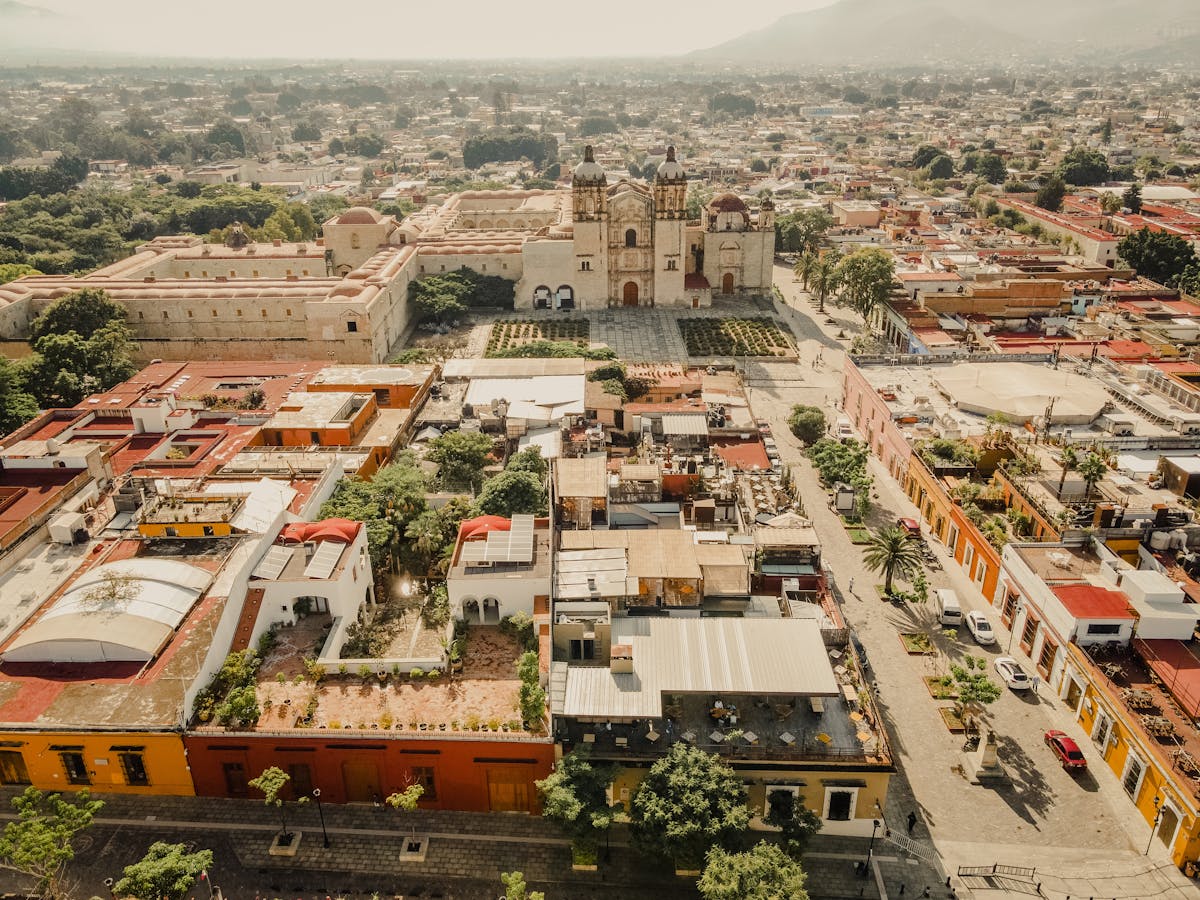
The dry season from November through April is the comfortable pick. Daytime temperatures sit around 25-28 degrees, rain is rare, and the sky is that deep clear blue that makes the pink cantera stone glow. But the two events that define Oaxaca — Guelaguetza in late July and Day of the Dead in late October — both fall outside this window and are worth dealing with humidity for.
Semana Santa (Holy Week, usually March/April) is the one to avoid. Mexico City empties into Oaxaca that week. Prices double, restaurants have waits, and the Zocalo is so packed you can barely cross it. If you want the city to yourself, January and February are dead quiet and the weather is perfect.
Getting There
ADO first-class buses run from Mexico City’s TAPO terminal to Oaxaca in about six hours via the mountain highway through Puebla. Several departures daily, tickets around 700-900 pesos. The road climbs over the Sierra Madre del Sur and the descent into the Oaxaca valley has views worth staying awake for even on a night bus.
Oaxaca’s airport (OAX) is small but has direct flights from Mexico City on Aeromexico, Volaris and VivaAerobus. Flight time is under an hour. Book two weeks ahead and Volaris fares can be cheaper than the bus. The airport is about 20 minutes south of the city centre — taxis from arrivals run a fixed rate of around 200-250 pesos.
From the Pacific coast (Puerto Escondido, Huatulco), OCC buses take 6-7 hours on mountain roads. Passenger vans (Transportes Atlantida) do the same route faster on the newer highway but the driving style is aggressive enough to make you question your choices.
Where to Stay
The centro historico is where you want to be. Everything — the markets, Santo Domingo, the best restaurants, mezcalerias, the Zocalo — is within walking distance if you stay somewhere between the Zocalo and Santo Domingo church. The pedestrian stretch of Alcala connects these two anchors and most of the city’s life happens along it or within a few blocks on either side.
Budget travellers land in the hostel zone on the streets radiating from the Zocalo. Dorm beds run 200-400 pesos. Most hostels have rooftop terraces where the sunset mezcal sessions start around 6pm. Private rooms in basic hotels cost 500-900 pesos within a few blocks of the centre.
The neighbourhoods of Jalatlaco and Reforma are where longer-term visitors and remote workers end up. More space, lower prices, quieter streets — but still a 10-15 minute walk to the Zocalo. Jalatlaco in particular has become trendy with coffee shops and restaurants, though it hasn’t lost its residential character yet.
For Day of the Dead or Guelaguetza, book accommodation at least a month ahead. Everything fills up and prices spike to three or four times the normal rate.
The Food
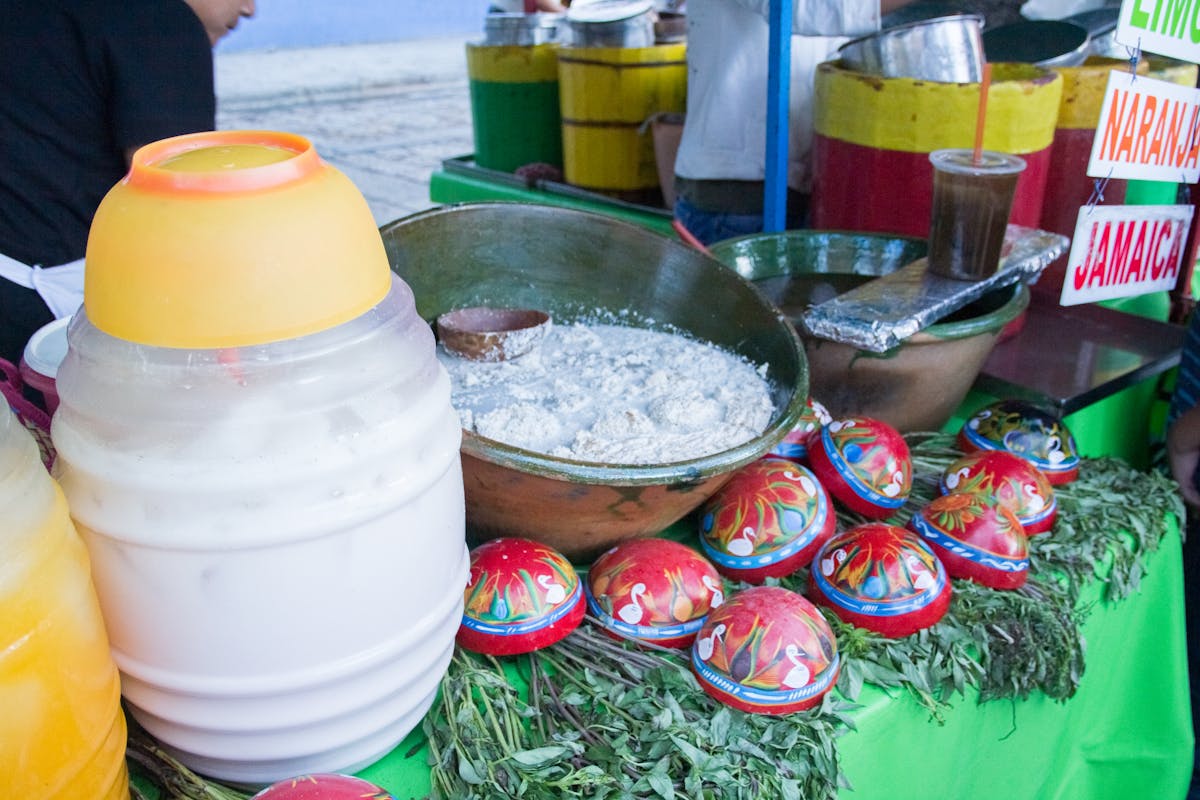
Oaxaca has seven moles. Everyone talks about mole negro — the most complex, with 30+ ingredients including chocolate, chilhuacles and banana — and it is genuinely impressive. But it is also heavy and rich. Mole amarillo, which is lighter, brighter, with hierba santa and chili costeño, is what I’d order for an actual meal. Mole coloradito, with its sweet-smoky ancho base, falls in between.
Tlayudas are the large crispy tortillas loaded with beans, asiento (pork lard), Oaxaca cheese and whatever meat you choose. The street carts near the 20 de Noviembre market sell them late at night and they are the best drunk food in Mexico. Some places fold them, some serve them flat like a pizza. Both are correct.
The Mercado 20 de Noviembre has the Pasillo de Humo — Smoke Aisle — where vendors grill tasajo (dried beef), chorizo and cecina over charcoal. You pick your cuts at one stall, sit at a communal table, and they bring you tortillas, grilled onions, nopales and four different salsas. The smoke is intense enough to flavour your clothes for the rest of the day. It is one of the best food experiences in Mexico and it costs about 120 pesos for a full plate.
Chapulines (grasshoppers) are at every market stall. Crunchy, lime-and-chili dusted, sold by the bag. They taste like spicy corn nuts and are honestly better than they sound. The ones at Mercado Benito Juarez tend to be more expensive than the Abastos market but the quality is consistent.
Markets
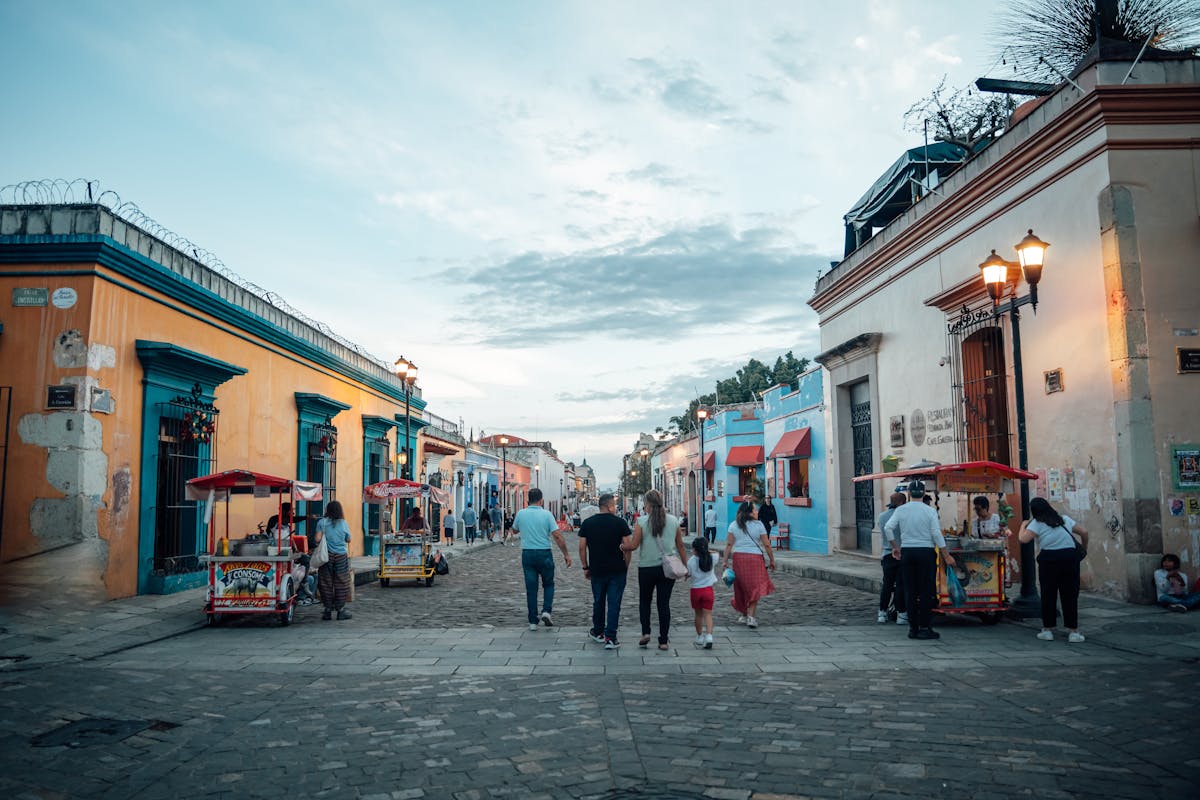
Oaxaca is a market city and always has been. The Zapotecs ran a market system in this valley before the Spanish arrived, and the weekly rotation of village markets still follows a schedule that has been running for centuries.
Mercado Benito Juarez in the centre has ground-floor food — cheese, chocolate, chapulines, dried chiles, mole pastes in plastic tubs — and upper-level crafts. It is the most tourist-accessible market but the quality is legitimate. The chocolate vendors will grind your blend to order: cacao, cinnamon, almonds, sugar, whatever ratio you want.
For the real market experience, the village tianguis are the thing. Sunday at Tlacolula is the biggest — an enormous market that sprawls through the streets of this town about 45 minutes east of the city by colectivo. Mezcal straight from producers, produce, livestock, textiles at prices well below the city shops. Friday at Ocotlan is strong for pottery and black clay from San Bartolo Coyotepec. Wednesday at Etla is smaller and more local. Get to any of them before 10am for the best selection.
Monte Alban
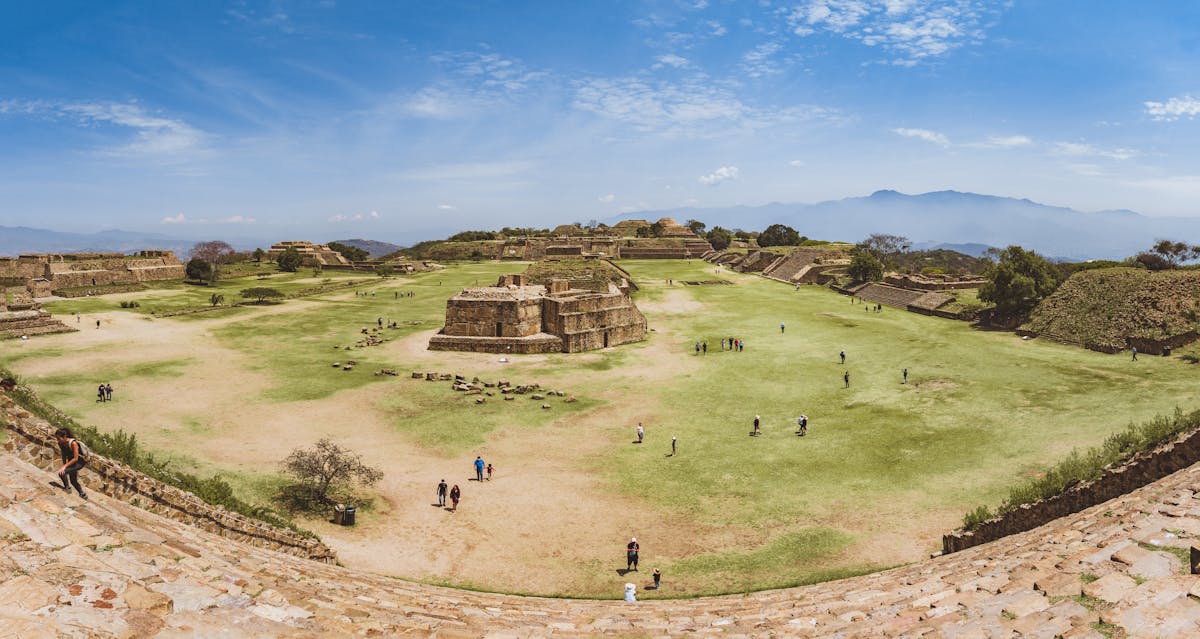
The Zapotec capital sits on a flattened mountaintop above the valley and the scale of it hits you physically when you walk out onto the Grand Plaza. They leveled the top of a mountain to build a ceremonial complex 300 meters long. The Danzante carvings — now understood to show sacrificed captives rather than dancers — line one wall. Tomb 7, where the richest pre-Columbian treasure ever found in Mexico was discovered in 1932, is on the hillside behind the main plaza.
The treasures from Tomb 7 — Mixtec gold, jade, turquoise mosaics, carved bone — are in the Museo de las Culturas de Oaxaca in the Santo Domingo monastery back in the city. See both in the same day: Monte Alban in the morning (go early, there is zero shade and the hilltop gets punishing by noon), museum in the afternoon.
Buses to Monte Alban leave from the Riviera del Angel hotel on Mina street every 30 minutes. 20-minute ride, around 80 pesos return. Entry to the site is about 90 pesos. Bring water, a hat, and sunscreen.
Mezcal
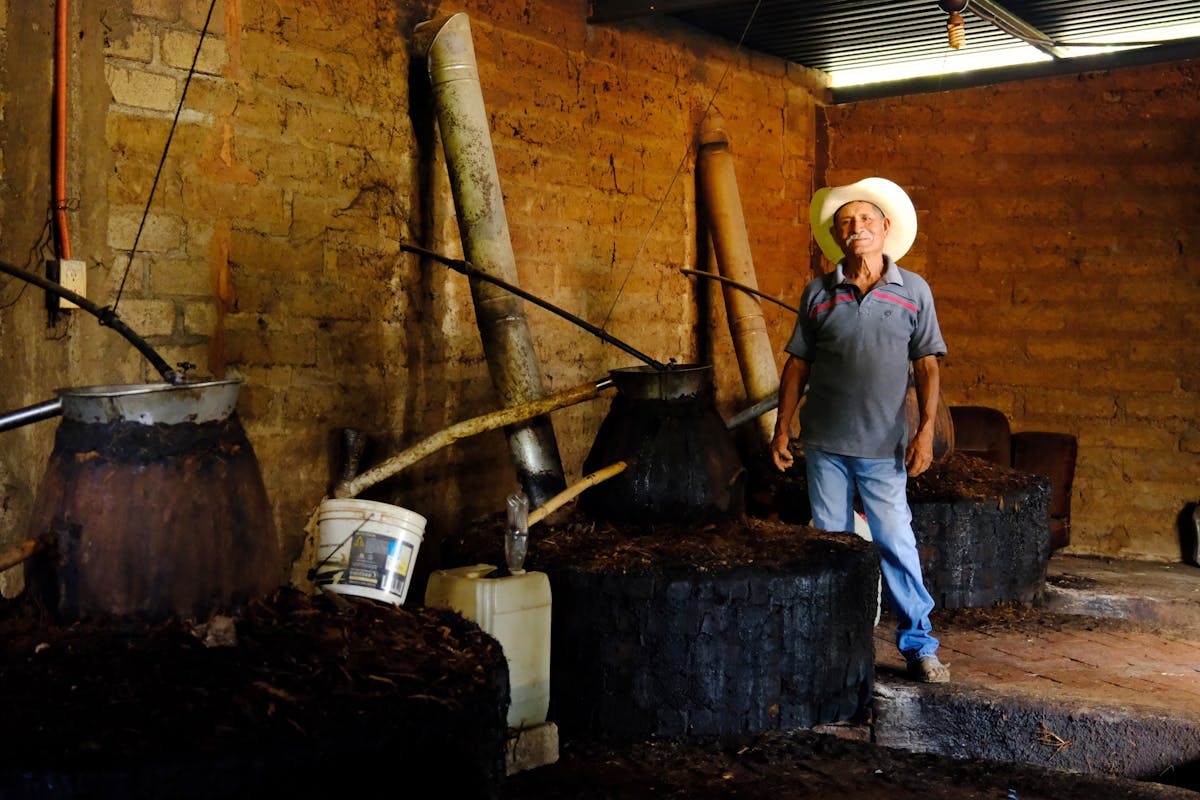
Oaxaca is where mezcal comes from. Not technically — mezcal is made across several Mexican states — but the mezcal culture is centred here and the concentration of mezcalerias in the city is staggering. Every other doorway on certain streets seems to open into a small bar with bottles lining the walls.
The basic education: mezcal is distilled from agave, which takes 7-15 years to mature depending on variety. Espadin is the most common agave and makes good mezcal at lower prices. Tobala, arroqueño and tepextate are wild agaves that produce more complex and expensive spirits. A joven (unaged) espadin in a mezcaleria costs 40-80 pesos per pour. Wild agave mezcals start around 120-200 pesos.
Do not order mezcal with lime and salt. That is for cheap tequila. Mezcal is sipped straight, sometimes with orange slices and sal de gusano (worm salt). The smoky flavour that defines mezcal comes from roasting the agave hearts in underground pits before distilling — a process that has not changed in hundreds of years.
For distillery visits, Santiago Matatlan (about an hour east of the city, on the way to Mitla) is the self-proclaimed “world capital of mezcal” and has dozens of small palenques (distilleries) you can visit. Most are family operations where the whole process from harvest to bottling happens in a single yard. Tastings are free or nearly free. Buy a bottle direct from the producer — it will be cheaper and better than anything in the tourist shops.
Day Trips
The Oaxaca valley is dense with things worth seeing within an hour of the city. The artisan villages — Teotitlan del Valle for rugs, San Bartolo Coyotepec for black pottery, Arrazola for carved wooden alebrijes — each take a half-day and are reachable by colectivo from the Abastos market area for 20-40 pesos.
Hierve el Agua, the petrified waterfall with natural infinity pools, is about 1.5 hours east. The mineral formations are genuinely striking and you can swim in the pools at the cliff edge. Colectivos from Mitla or organized day trips from the city. Go on a weekday — weekends get crowded.
Mitla, the Zapotec site famous for its geometric stone mosaics, is 45 minutes east and can be combined with Hierve el Agua in a single day trip. The mosaic work at Mitla is unlike anything at Monte Alban or any other Mesoamerican site — abstract geometric patterns fitted together without mortar.
Yagul and Dainzu are smaller archaeological sites along the same road toward Mitla. Yagul has a hilltop fortress with valley views and a large ball court. Dainzu has the best ball-player carvings in Oaxaca. Both are rarely visited and worth a stop if you have a car or are willing to walk from the highway.
Getting Around
The centro historico is walkable — from the Zocalo to Santo Domingo is a 10-minute walk, and almost everything you need is within this zone. Taxis within the centre cost 40-60 pesos. No meters — always agree on the price before getting in.
Colectivos (shared taxis and vans) leave from designated spots near the Abastos market and the second-class terminal. Fares are 20-60 pesos depending on distance. They leave when full, which usually means waiting 5-15 minutes. This is how you reach the villages, markets and the coast cheaply.
For the coast, OCC buses from the first-class terminal on Calzada Niños Heroes de Chapultepec run to Pochutla (for Zipolite, Mazunte, Puerto Angel) in about 6 hours. Puerto Escondido is roughly the same by a different route. Vans on the newer highway are faster but the mountain driving is not for nervous passengers.
Practical Details
ATMs are easy to find on Alcala and around the Zocalo. Most accept international cards. Keep cash for taxis, colectivos, and market purchases — the centre’s restaurants take cards but markets and street food are cash only.
Altitude matters. Oaxaca city sits at 1,550 meters. You won’t get altitude sickness but the sun is stronger than at sea level. Sunscreen and a hat are not optional.
The tap water is not safe to drink. Buy garrafones (large jugs) from any tienda or stick to bottled water. Ice in restaurants is generally made from purified water and is fine.