Day of the Dead in Oaxaca is not a party. It is not Mexican Halloween. It is not a costume event where tourists take selfies with face paint. It is a multi-day ritual where families sit with their dead — literally, at the graveside — bring them food and flowers and music, and spend the night keeping vigil. If you go expecting a festival, you will miss what is actually happening. If you go paying attention, it will be one of the most moving things you see in Mexico.
I have been twice. The first time I wandered into the cemetery at Xoxocotlan not really understanding what I was walking into. The second time I knew what to expect and spent the whole night there, from the first candles being lit until dawn. Both visits changed something in how I think about death and remembering people.
What Actually Happens
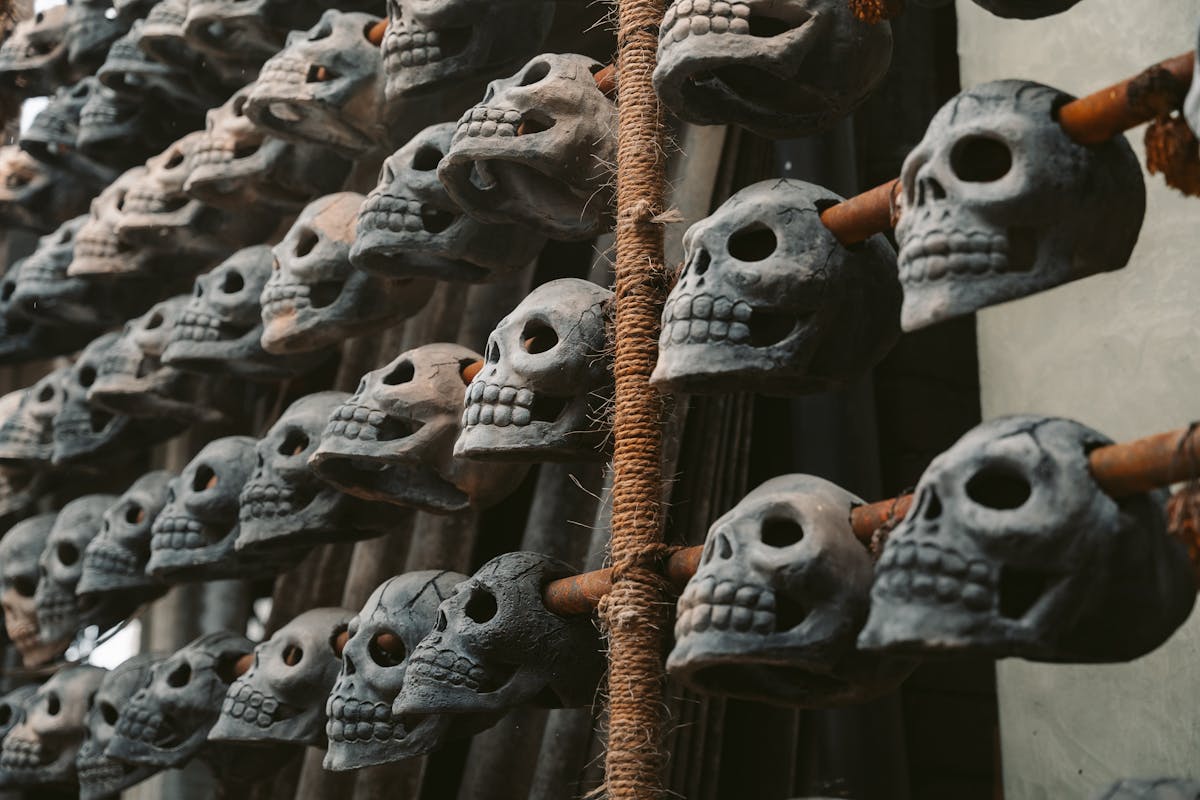
Day of the Dead unfolds over several days in late October and early November, with the intensity building toward the main nights of November 1st and 2nd.
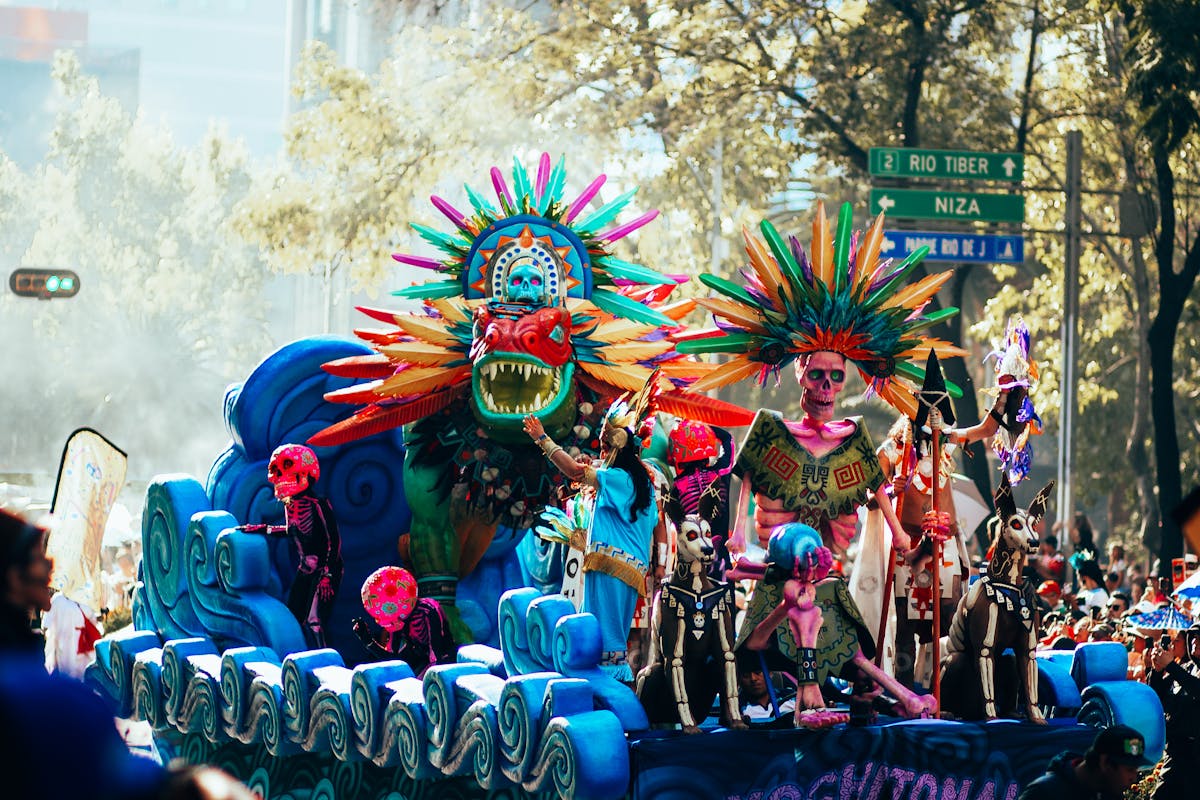
October 31st: Comparsas — neighbourhood parades through the streets with brass bands, giant puppet figures called monos de calenda, people in costume and face paint. These start from different neighbourhoods and wind toward the Zocalo. Follow the music. Multiple comparsas run simultaneously across the city so you will encounter them randomly on the streets. The energy is joyful and chaotic — tuba players, dancing skeletons, kids running alongside.
November 1st — Dia de los Angelitos: Dedicated to children who have died. Families build ofrendas (altars) with toys, sweets, small shoes, favourite foods. The tone is tender. Many homes open their doors so you can see the ofrendas inside. The markets overflow with cempasuchil (marigold flowers), pan de muerto (the sweet bread with bone-shaped decorations), chocolate, candles and copal incense.
November 2nd — Dia de los Muertos: The main event. Families go to the cemeteries in the afternoon and stay through the night. They bring food, drinks, candles, marigolds and ofrendas to the graves. They eat, talk, play music, cry, laugh. The cemeteries fill with thousands of candles and the smell of marigolds and copal is overwhelming. This is not a performance — these are real families remembering real people.
The Cemeteries
Xoxocotlan (Panteones de Xoxo): The most visited cemetery and the one most tourists end up at. It is large, atmospheric, and the scale of the candlelight vigil is impressive. It also gets extremely crowded with both families and tourists. If you go, arrive by 8-9pm and stay late — the tourist crowds thin out after midnight and the atmosphere becomes more intimate.
Panteon General (Oaxaca city centre): Closer to downtown, slightly less touristed than Xoxo. Same vigil tradition, easier to reach on foot from the centro.
San Felipe del Agua: A smaller cemetery in the hills above the city. Fewer tourists, more personal. If you want the experience without the crowds, ask locals for directions. The walk up is dark — bring a flashlight.
Village cemeteries: The surrounding villages each have their own cemetery vigils and these are generally less touristed. Santa Cruz Xoxocotlan, San Agustin Etla, Atzompa — each with its own traditions. Getting to village cemeteries requires a taxi or colectivo and some initiative, but the intimacy is worth it.
Ofrendas and Marigolds
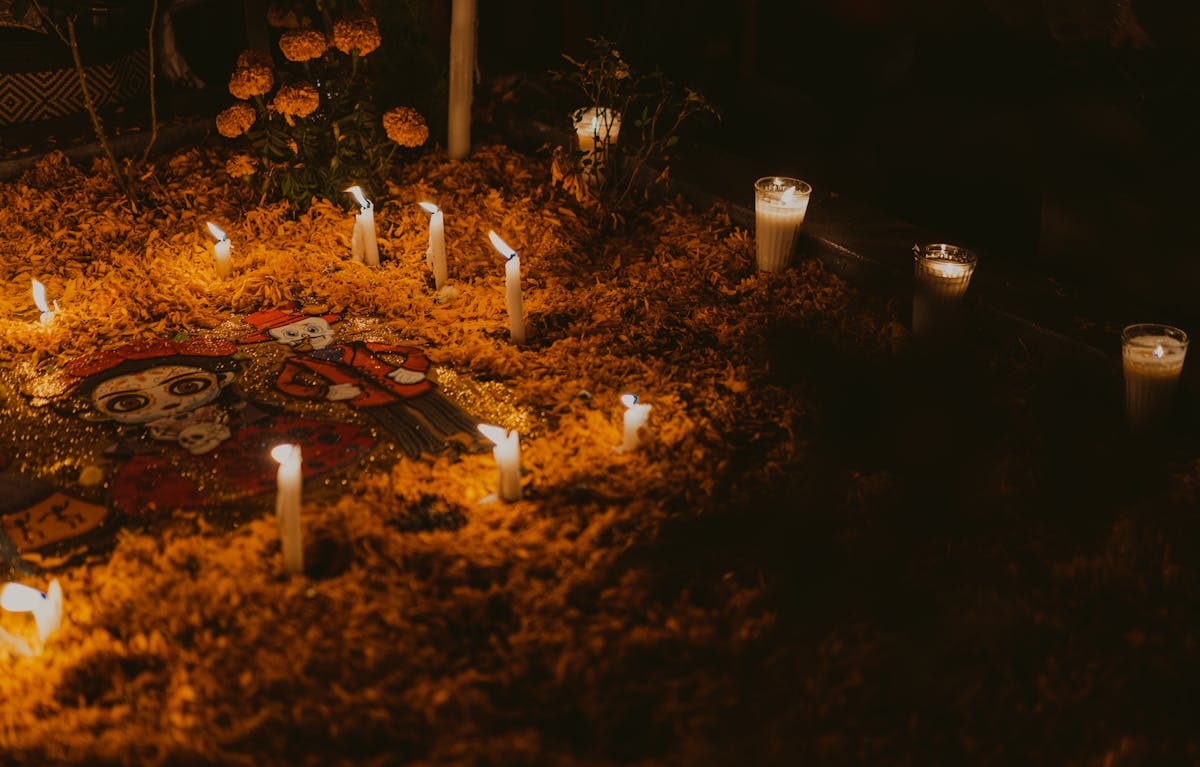
The ofrenda (altar) is the centrepiece of Day of the Dead. Families build them at home and at the graveside. A typical ofrenda has the dead person’s photograph, their favourite foods and drinks, candles, cempasuchil flowers, pan de muerto, chocolate, mezcal or beer, and personal items — a favourite hat, a book, a tool. The marigold petals are scattered in paths from the front door to the ofrenda, guiding the spirits home.
Cempasuchil (marigold) flowers are everywhere during the week before Day of the Dead. Market stalls pile high with bundles of orange and yellow blooms. The colour and scent are the visual identity of the holiday. Buying a few bundles and decorating your hotel room or hostel is a way to participate even if you are not visiting a family.
Sand tapestries (tapetes de arena) appear in the streets and plazas — intricate designs made from coloured sand depicting skulls, skeletons and religious imagery. Artists work for hours creating them and they are swept away the next day. The main ones in the Zocalo and along Alcala are spectacular.
Being a Respectful Visitor
This is the most important section. Day of the Dead in Oaxaca has become a major tourist draw and the tension between authentic family ritual and tourism spectacle is real. Some things to keep in mind:
Do not photograph families at graves without asking. Some families welcome it, some do not. A nod or quiet “permiso?” goes a long way. If someone shakes their head, put the camera down.
Do not treat the cemetery as a photo set. Walk quietly. Do not step on graves or lean on headstones. Do not move candles or marigolds for a better shot. People are mourning their dead children, parents, spouses. Act accordingly.
Participating is welcome — buying pan de muerto, wearing face paint (done at stalls around the Zocalo), joining the comparsas, visiting public ofrendas. Being present and respectful is fine. Turning someone’s grief into your Instagram content is not.
The Guelaguetza
If you cannot make Day of the Dead, Oaxaca’s other major cultural event is the Guelaguetza in late July. Dance troupes from the seven regions of Oaxaca state perform traditional dances at the open-air Auditorio Guelaguetza amphitheatre on the Cerro del Fortin hill above the city. Free performances happen in the Zocalo and plazas throughout Guelaguetza week.
The Guelaguetza is more of a performance and celebration than a sacred ritual — it is festive, colourful and exuberant. Hotel prices spike and accommodation books out well in advance, same as Day of the Dead.
Practical Information
When: October 31 through November 2, though festivities and preparations begin a week or more before. The main cemetery vigils are the nights of November 1st and 2nd.
Accommodation: Book at least a month ahead, two months if possible. Prices are 2-4 times the normal rate during Day of the Dead week. Budget options fill up fastest. Some travellers stay in nearby towns (Etla, Tlacolula) where prices are lower and taxi/colectivo into the city.
Getting around: The comparsas and cemetery vigils run late into the night. Taxis are available but demand is high. Walking is the best option for events in the centro. For Xoxocotlan cemetery, taxis or colectivos from the centro take about 20 minutes.
What to bring: Warm layers — November nights in Oaxaca at 1,550 metres can be cool, especially if you are sitting in a cemetery until 3am. A flashlight for village cemeteries. Cash for market purchases, pan de muerto, mezcal. A camera with a good low-light capability — the candlelit cemeteries are dim and atmospheric.
Tours: Several Oaxaca operators run guided Day of the Dead experiences including cemetery visits, ofrenda-building workshops, and market tours. These can be useful for context and translation but are not necessary — the events are public and you can attend everything independently.